
Modern construction projects depend heavily on proper access systems, and scaffolding in building construction plays a central role in making that possible. Scaffolding delivers essential stability and capabilities to workers who need to complete their work tasks, which include exterior painting, facade installation and structural repairs.
The structure functions as temporary support for property owners and clients but also serves as a sign that work is being performed according to professional standards, safety requirements and operational efficiency. This blog presents you with what scaffolding is, why it matters, types of scaffolding in construction, components, uses, safety rules, and how professionals choose the right system.
What is scaffolding?
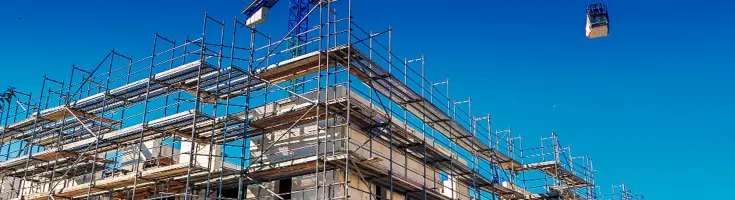
Scaffolding is a temporary framework made of metal or wood platforms supported by vertical and horizontal members. It allows workers to stand securely at heights while performing construction, maintenance, or installation work.
Professionals rely on scaffolding instead of ladders because ladders offer limited balance, space, and safety. Scaffolding delivers extensive platforms that enable users to move more easily while providing support for their equipment and materials.
Benefits include:
- Faster project completion
- Safer working conditions
- Higher-quality finishing
- Better precision for detailed tasks
Why scaffolding is essential for construction projects
The importance of scaffolding in building construction goes beyond convenience. It directly affects safety, quality, and project timelines. The scaffold installation protects workers from falling hazards, which decreases accident rates and maintains work operations without interruptions.
The scaffold system enables workers to access walls without supporting their equipment on fragile materials that include glass panels and finished cladding. Scaffolding provides access to hard-to-reach areas while enabling accurate installations of windows, facade systems and decorative elements. Most importantly, it prevents delays. When workers can move freely and safely, tasks are completed on schedule.
Main types of scaffolding used on sites
Understanding the types of scaffolding in construction helps you recognize why contractors select specific systems for different projects.
1. Single scaffolding
The scaffold structure consists of one row of vertical standards that connect to horizontal ledgers. The system operates as a lightweight solution that assembles rapidly and handles tasks that do not need heavy load capability.
Ideal for:
- Brick masonry work
- Low-rise residential buildings
- Exterior plastering
- Minor repair jobs
- Short-duration projects
Where it’s commonly used:
Building a small house, compound walls and basic exterior finishing work that meets height and weight requirements.
2. Double scaffolding
The system uses two parallel support rows to create additional structural stability and strength. It functions as a solution for work that requires operators to handle heavy materials during extended periods.
Ideal for:
- Stone masonry
- Heavy facade work
- Structural repairs
- Long-term construction
- Thick wall construction
Where it’s commonly used:
Large residences, commercial facilities and areas that require continuous operations to be supported by external resources.
3. Cantilever scaffolding
A scaffold supported from one side using needles or brackets fixed to the structure. The system functions in locations where ground space needs to be restricted and vertical standards cannot be installed.
Ideal for:
- Narrow streets
- Sites with obstructions below
- Upper-floor maintenance
- Repair work above entrances
- Urban construction zones
Where it’s commonly used:
Buildings close to roads, busy public areas, or locations where ground-level scaffolding is impractical.
4. Suspended scaffolding
This structure uses a suspended platform that hangs from the building roof through a rope, chain or mechanical system. The system provides an easy mechanism that allows users to change their height for accessing various building levels.
Ideal for:
- High-rise window cleaning
- Glass installation
- Exterior inspections
- Painting tall structures
- Maintenance of skyscrapers
Where it’s commonly used:
The category of buildings includes tall structures, corporate office towers, hotels and any building that needs to provide access to its upper elevation without ground support.
5. Trestle scaffolding
The platform functions through movable ladders and tripod stands. The system functions as a compact and portable unit that operates best in indoor environments and areas with low ceilings.
Ideal for:
- Interior painting
- Ceiling repairs
- Electrical maintenance
- Indoor renovations
- Light finishing tasks
Where it’s commonly used:
In spaces of residence, offices, and commercial interiors where work surfaces are low and movement is necessary.
6. Steel scaffolding
The engineers constructed the scaffold using steel tubes and couplers, which demonstrated strong structural capacity to handle weight. The material maintains its integrity under extreme weather conditions, which makes it suitable for high-demand operational environments.
Ideal for:
- Heavy construction projects
- Industrial sites
- Long-duration work
- Bridge or infrastructure tasks
- High-load material handling
Where it’s commonly used:
It is commonly used in locations that need to establish robust structural systems to support extensive commercial buildings, industrial sites and infrastructure projects.
7. Patented / Modular scaffolding
The ready-to-install frame system with built-in locking mechanisms creates an efficient installation solution that maintains adjustable height capabilities while delivering complete stability.
Ideal for:
- Modern construction projects
- Complex architectural designs
- Fast-track construction
- Facade installation
Where it’s commonly used:
Contemporary commercial sites, malls, high-end residential towers, and advanced facade or glazing installations.
Uses of each type of scaffolding
Different types of projects require different types of scaffolding in construction,
Residential areas: Use of single scaffolds or trestle scaffolds for performing lighter construction tasks.
Commercial buildings: Use steel systems or modular systems because these materials offer higher durability.
The installation of glass facades: Use suspended scaffolds and modular scaffolds because they provide precise positioning.
Window maintenance work: Cleaning and replacement uses suspended platforms as the primary equipment.
Exterior painting: May use single or double scaffolds depending on height.
Structural repairs: Often demand steel scaffolding for stability.
Picking the right scaffold ensures worker’s safety, prevents damage, and delivers effective results.
Components of scaffolding
Every scaffold is built from key parts that work together to form a secure structure:
- Standards: Vertical poles that support all the required load-bearing capacity.
- Ledgers: Horizontal tubes that connect two separate standards
- Putlogs: Cross pieces that support the platform.
- Base plates: Foundations that provide structural stability to the building
- Platforms: These are the working areas where workers can stand.
- Safety rails: Function as guardrails and prevent worker’s falls
- Toe boards: Function as raised edges, which prevent tools from slipping.
- Couplers and Fittings: Function as connectors that maintain all parts in a fixed position.
Strong, well-maintained components are essential. Weak or damaged parts can compromise stability and increase risk.
Scaffolding safety guidelines
Proper scaffolding in building construction must always follow strict safety measures. The implementation of construction scaffolding safety standards protects both workers and property owners from potential hazards.
Key safety practices
- Installation by trained professionals
- Buildings require secure anchoring for structures
- We need to maintain load limits according to established regulations
- Install guardrails and fall-protection systems
- Need to conduct daily inspections before starting to use the equipment
- Workers should not perform their tasks when strong winds or storms occur
- All workers must wear safety equipment, which includes helmets and harnesses
How professionals choose the right scaffolding
Experts evaluate several factors before selecting a scaffold system:
- Building height: Taller structures need stronger or suspended systems.
- Work type: Different setups are needed for glazing, masonry and painting work.
- Ground conditions: Uneven soil needs stable base support.
- Project duration: Long projects require durable materials.
- Budget: An efficient selection process determines the optimal balance between cost and performance.
Correct choice improves productivity, prevents delays, and avoids unnecessary expenses.
Common scaffolding mistakes to avoid
Even small errors can cause major problems. The most frequent mistakes include:
- The construction worksite is dangerous if workers use incorrect scaffold equipment
- If installed incorrectly, it may lead to a poor installation process.
- Overload work platforms with excessive materials.
- Skipping required inspections, which creates safety hazards.
- Employing workers who lack necessary training for their assigned tasks.
Avoiding these mistakes keeps projects safe and prevents costly damage.
Benefits of hiring professionals for scaffold-based work
Hiring professionals for scaffold work can make construction work stress free; they handle setup and ensure construction scaffolding safety.
- They provide proper and secure scaffold installation
- They comply with safety standards
- They complete work at a faster pace.
- They provide results in superior quality finishing.
- They reduce risk to people and property due to experience.
- They can handle delicate materials safely
Why scaffolding matters in glazing projects
Glass installation demands accuracy, balance, and steady positioning. The technicians need a stable scaffold platform because it enables them to align panels with exact precision while applying sealants in straight lines and they can secure fittings without movement. The handling of heavy glass sheets at height becomes unsafe when workers lack adequate support, which makes scaffolding an essential requirement for all glazing operations.
The process creates a clean finish. The workers inspect edges, joints and frames to ensure that they achieve professional results, which improve construction scaffolding safety and visual appearance.
Your project begins with the right scaffolding support
From residential homes to high-rise towers, scaffolding in building construction is a vital element that supports safe working conditions, precise installations, and efficient progress. Clients who understand the different types, requirements, essential elements and construction scaffolding safety regulations can identify professional standards and select trustworthy contractors.
MBF Enterprise uses secure work platforms together with expert operators and precise work processes. These elements guarantee successful delivery of all our projects. Contact MBF Enterprise today to schedule your consultation and experience professional workmanship backed by safe construction practices.