
To use mobile scaffolding safely for maintenance in a commercial building, choose a tower that matches your working height, check that the floor is level and strong enough, assemble it with locked castors, fit guardrails and toe boards, climb only from inside the frame, and move it only when it is empty. One trained team can then reach ceilings, ducts, lights and facades without shutting down the whole floor.
If you manage a commercial property, you already know that maintenance never really stops. A tube light fails in a double-height lobby, an AC duct needs cleaning, a signboard has to be repainted, or a fire-alarm sensor needs replacing near the ceiling. Each of these jobs happens at height, and each one needs a safe, stable way to get there.
At MBF Enterprises, we have spent years watching how maintenance teams work on real sites, and the pattern is always the same. The jobs that go smoothly are the ones where the team picked the right equipment and set it up properly. This guide walks you through exactly how to do that with Aluminium Mobile Scaffolding, step by step, in plain language.
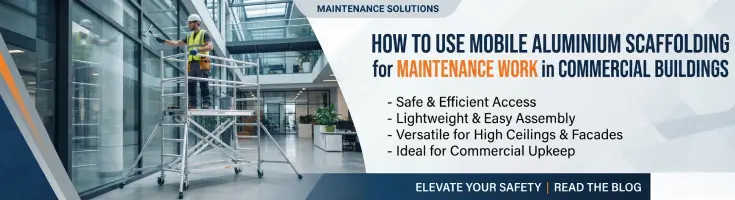
Why Do Commercial Buildings Prefer Mobile Aluminium Towers?
Commercial spaces are busy. Offices have staff at their desks, malls have shoppers, and hospitals cannot pause for anyone. Heavy steel scaffolding takes hours to assemble and blocks large areas. That is rarely practical for a two-day maintenance job.
An Aluminium Mobile Scaffold Tower solves most of these problems. Aluminium is light, so two or three people can carry and assemble the frames without a crane or heavy tools. It does not rust, which matters in a humid coastal city. And because the tower sits on castors, you can roll it from one workspot to the next instead of dismantling and rebuilding it every time.
There is also the floor to think about. Marble, vitrified tiles and polished concrete are expensive to repair. A lightweight tower with proper castor pads puts far less load on the flooring than a bulky steel structure.
Where Is Mobile Scaffolding Used for Maintenance?
From our experience on commercial sites, these are the jobs where mobile towers do the most work:
Replacing or servicing lights, false-ceiling panels and sprinkler heads
Cleaning and repairing HVAC ducts and diffusers
Painting interior walls, atrium walls and columns
Cable, conduit and CCTV installation or repair
Cleaning glass partitions, skylights and facade sections
Fixing signboards, banners and display fittings
Waterproofing and minor structural repairs near ceilings
Most of these tasks need a steady platform for a few hours, not a permanent structure. That is exactly where a movable tower earns its place.
How Do You Choose the Right Tower Height and Type?
The first mistake we see is picking a tower by guesswork. Start with a simple rule: the platform height should let the worker reach the task comfortably without stretching or standing on the top rail. Most manufacturers allow a working height of roughly two metres above the platform, so a worker on a four-metre platform can usually reach a six-metre ceiling.
Then check these points before you decide:
Working height: Measure from the floor to the point of work, not just the ceiling
Platform size: Pick a deck that holds the worker, tools and materials without crowding
Load rating: Add up the weight of people, tools and materials, and stay within the rated limit
Floor condition: Check for slopes, ramps, gaps, cable trunking and soft areas
Passage width: Confirm the tower, with its stabilisers, can pass through doors and lifts
A single-width Aluminium Scaffolding Tower suits narrow corridors and tight service areas, while a double-width tower gives more platform space for painting or duct work. If you are unsure, talk to aluminium scaffolding manufacturers in Chennai who can look at your site requirement and suggest the right configuration instead of selling you whatever is in stock.
Step-by-Step: How to Set Up a Mobile Scaffold Tower Safely
Here is the sequence our own crews follow on site
Walk the area first: Look for overhead cables, glass fixtures, wet floors and anything the tower could hit while moving. Cordon off the work zone with barricade tape and signs
Check every component: Inspect frames, braces, castors, locking pins and platform decks. Do not use any part that is bent, cracked or missing a locking pin
Fit the castors and lock them: Every castor must have a working brake. Test each one by pushing the frame before you add more levels
Assemble from the bottom up: Join the base frames, add horizontal and diagonal braces, and keep the structure square as you go
Level the tower: Use the adjustable legs or base jacks. Check with a spirit level. A tower that leans even slightly becomes unsafe as it gets taller
Add stabilisers or outriggers: Taller towers need them. The general rule is that the height of the platform should not exceed three times the smaller base dimension when working indoors. Your supplier's manual gives the exact figure for your model
Install the platform with a trapdoor: Fit the working deck, then add guardrails on all sides and toe boards around the edge
Climb from inside the tower: Use the built-in ladder frame. Never climb the outside, and never carry heavy tools in your hands while climbing. Use a rope or bucket to lift them
What Safety Rules Should Your Team Never Skip?
A good tower is only half of the story. The other half is how people behave around it. These rules matter most in real working conditions:
Train the crew: Only people who understand assembly, load limits and the rules for moving a tower should handle it
Wear proper gear: Helmets, non-slip shoes and, where required, a safety harness anchored to a suitable point are basic requirements
Never overreach: If the work is out of reach, come down and move the tower. It takes a minute and prevents a fall
Keep the platform tidy: Loose tools and cables on the deck cause trips and falling objects
Respect the load: Do not stack materials on the platform beyond the rated limit
Watch the weather and the building: For work near open facades, strong winds can make a tall tower unstable
No one on the tower while it moves: This is the rule people break most often, and it is behind a large share of avoidable accidents
In India, work at height is covered under building and construction safety norms, so a documented risk assessment and a site-specific method statement are good practice for every job, however small.
How Do You Move a Mobile Scaffold Without Risk?
The whole point of the castors is easy movement, but this is also where mistakes happen. Before moving the tower, remove people, tools and loose material from the platform. Check the path for door thresholds, floor joints and cables. Release the brakes, push slowly from the base using the frame, and never pull from the top. Lock all brakes again as soon as the tower reaches its new position, and check the level before anyone climbs
For long distances or uneven floors, it is safer to dismantle the tower and reassemble it than to push it across a risky route.
Common Mistakes We See on Commercial Sites
After working with maintenance teams across offices, retail spaces and industrial units, here are the errors we see again and again:
Using a tower that is too short and standing on the guardrail to reach the work
Skipping the stabilisers to save time
Leaving castors unlocked while working
Placing the tower on uneven tiles, drain covers or temporary boards
Letting untrained helpers assemble or move the structure
Ignoring small damage like a bent brace or a worn castor
If your property team has been relying on borrowed ladders or improvised platforms, switching to Aluminium Scaffolding in Chennai from a reliable supplier is one of the simplest upgrades you can make to your safety record.
How Should You Inspect and Maintain the Equipment?
Good scaffolding lasts for years when it is looked after. Inspect it before every use and again after any impact or heavy-load job. Check welds, joints, pins, decks and castors. Keep moving parts clean and lightly lubricated. Store the frames dry and flat, away from chemicals and heavy items that could dent the aluminium. Keep a simple log with dates, inspector names and any parts replaced. Auditors and insurers appreciate it, and so will your safety officer.
Safer Maintenance Starts with the Right Scaffold
Maintenance work in commercial buildings does not have to be slow, risky or disruptive. When you choose the right height, assemble the tower carefully, lock the castors, use guardrails and train your crew, a mobile tower turns a difficult job into a routine one. Treat inspection and safe movement as part of the work, not as extras, and your team will stay safer and finish faster.
If you are planning upkeep work at your property and need dependable equipment, our team at MBF Enterprises can help you pick the right tower and arrange supply. Get in touch with us for Aluminium Scaffolding Rental in Chennai and give your maintenance crew the safe working platform they deserve.