
Construction projects involve several high-risk activities, and scaffolding work is one of the most critical among them. Whether for residential, industrial, bridge or commercial construction projects, scaffolding provides workers with the support they need to work safely at heights. Improper usage may result in accidents, harm, and delays.
This is the reason why it is important to follow the safety measures of scaffolding workers in all construction projects. A professional scaffolding worker in Chennai will know the importance of inspection, safety equipment use, scaffold erection, and safe practices to ensure the safety of all workers involved. This blog will cover the top 8 technical safety guidelines that all scaffolding workers should follow.
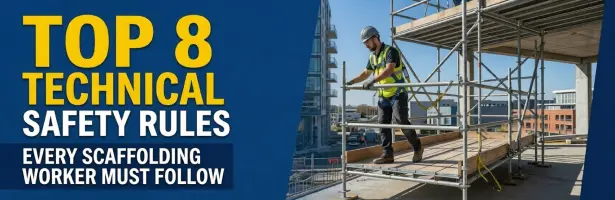
Why scaffolding safety is important in construction
Scaffolding plays a major role in helping workers access elevated areas safely during construction and maintenance work. Despite the fact that scaffolds are built to offer maximum stability, accidents may happen due to poor installation, absence of proper training, overloading, or violation of safety precautions.
One of the main reasons for injuries sustained during the building process is falling from height. Furthermore, improper scaffolding can cause scaffold collapse, dropping of tools, and damages to structures. That is why scaffolding safety must be top priority for contractors, site managers, and workers.
Professional scaffolding workers in Chennai are trained in hazard detection and strict safety procedures to embark on any task. Proper implementation of safety procedures not only ensures that workers remain safe but also prevents problems for businesses.
Top 8 technical safety rules every scaffolding worker must follow
1. Inspect scaffold components before erection
Each component needs to be checked before any scaffolding installation takes place to prevent possible collapse during operation, which can occur due to poor-quality equipment.
The checks should cover:
- Bent or cracked scaffold pipes
- Corroded couplers and clamps
- Damaged steel planks
- Faulty locking pins
- Faulty base plates
Regular inspection is an important part of scaffolding worker safety because faulty components can lead to platform instability and worker injuries. All damaged materials should be replaced immediately before scaffold erection starts.
2. Ensure proper foundation and base support
It is necessary that the scaffolding should be erected on firm and level ground. Unfirm ground will lead to unequal distribution of load and increase the probability of the scaffold falling down.
Proper base support includes:
- Use of sole board and base plate
- Check stability of soil
- Leveling
- Use of firm ground
- Proper foundation anchoring
An expert scaffolding worker in Chennai knows how crucial it is to lay firm foundations in order to maintain the safety of the scaffolding structure.
3. Install cross bracing and tie systems correctly
The addition of cross-bracing helps stiffen the scaffolding and prevent movement during operation. Lack of good cross-bracing can be dangerous on a construction site.
Some examples of correct bracing practices involve:
- Diagonal bracing
- Correct installation of wall ties at the right spacing
- Tightening all couplers
- Structural alignment
- Checking tie connections
Proper reinforcement is a major requirement in scaffolding worker safety standards because it prevents swaying and structural imbalance during heavy work activities.
4. Maintain safe scaffold load distribution
Every scaffold system has a weight-carrying capacity that must not be exceeded in any circumstance. Overloading or non-uniformity in material loading can affect the strength of the platform.
Steps involved in the safety measures of load management include the following:
- Observance of maximum load capacity
- Uniform distribution of materials
- Avoiding concentrated weight points
- Periodic removal of unnecessary materials
- Cleanliness of platforms
A knowledgeable scaffolding worker in Chennai is conscious about the load management procedure.
5. Secure working platforms properly
Working platforms should offer reliable support that allows workers to move around while working at heights safely. Inadequately installed planks will lead to the shifting of planks while working.
Safety practices on working platforms involve:
- Ensuring proper installation of scaffold planks
- No spaces between planks
- Enough width of planks
- Anti-slip surface on planks
- Regular inspection of planks condition
Strong and properly secured platforms are essential for scaffolding worker safety because they help workers move safely while handling tools and construction materials.
6. Install guardrails and toe boards according to standards
The usage of guardrails and toe boards is an essential strategy, which ensures that there will be no falls from heights or dropping of material off the elevated platforms.
The main installation requirements that need to be met are:
- Reliable fixing of the upper and middle guardrails
- Placement of the toe boards on open edges
- Stability check of the railings
- Adjusting guardrails height
- Replacing the damaged barriers
It is crucial for every scaffolding worker in Chennai to guarantee that fall protection systems will not break during the whole construction period.
7. Provide safe access using secured ladders
Employees should utilize the provided access systems rather than climb the scaffold structures themselves. Improper climbing methods may lead to slipping and injury.
Safe access methods are as follows:
- Proper ladder use
- Correct ladder angle maintenance
- Obstacle free routes
- Regular inspection of ladder conditions
- Providing staircase access on high scaffolds
Proper access systems are an essential part of scaffolding worker safety because they allow workers to move safely between different working levels.
8. Follow electrical and weather safety regulations
Scaffolding work close to power lines and during adverse weather requires extra precautions to prevent accidents and equipment failure.
Safety precautions include:
- Stay away from power lines
- Stop work in strong winds
- Don’t use scaffolding when there is heavy rain
- Checking for water on wet platforms
- Constant monitoring of the weather
A trained scaffolding worker in Chennai understands that environmental conditions can affect scaffold stability and worker balance. Following weather and electrical safety regulations helps reduce risks and improve overall site safety.
Common mistakes scaffolding workers should avoid
Workers may still be prone to errors despite having experience, especially when safety measures are disregarded. Common errors committed by workers are as follows:
- Scaffold inspection skipped
- Defective equipment use
- Scaffolding overloaded
- Improper use of PPE
- Illegal ascent of scaffold
- Disregarding weather warnings
Avoiding such errors is imperative in ensuring the safety of scaffolding workers at all times.
Benefits of following scaffolding worker safety rules
Following correct safety practices results in long-term benefits.
Reduced workplace accidents: Safety procedures minimize injuries or deaths in the workplace.
Increased efficiency: When employees feel secure, they perform better.
Increased speed in completing projects: Fewer accidents mean fewer interruptions and delays.
Improved worker confidence: Improved working environment boosts the self-confidence levels of employees.
Compliance with safety standards: Safety standards ensure compliance with industry standards and prevent penalties.
Why hire professional scaffolding workers in Chennai
Hiring trained professionals remains among the best options for ensuring that safety and quality are maintained in construction sites. Skilled workers know how to erect the scaffolds, manage the loads, ensure safety, and conduct inspections.
Scaffolding experts ensure that there is:
- Safe scaffold erection
- Appropriate risk assessment
- Skilled labor force
- Smooth project implementation
- Observance of safety guidelines
Daily safety checklist used by professional scaffold workers
Daily safety checklist used by professional scaffold workers
A professional scaffolding worker in Chennai knows that even minor problems can result in major accidents. Checking a daily checklist enhances the safety of scaffolding workers and enables easy flow in construction activities all through the day.
- Check whether the scaffold structure has loose fittings, cracks, and damages
- Make sure that the scaffold structure is stable and level
- Ensure that the guardrails and toeboards are adequately fitted
- Use all your protective gears like helmets, gloves, and harnesses
- Make sure that the scaffold does not have too much weight on it
- Make sure that there is no debris and wet material on working platforms
- Check the ladder to ensure safe climbing
Smart scaffolding solutions for safer construction sites
Scaffolding safety should never be ignored in any construction project. Simple precautions such as inspection, proper installation, use of personal protective equipment, and fall protection may help avoid accidents and save many lives. With these top 8 safety rules, construction firms will see that their efficiency increases, and reduce danger at work.
At MBF Enterprise, safety and quality remain the foundation of every project. We are the best scaffolding rental in Chennai, along with our highly skilled professionals and reliable scaffold solutions. We support safe and efficient construction operations across multiple industries and you can hire our scaffolding workers in Chennai.
Contact MBF Enterprise for reliable and safety-focused scaffolding solutions!